


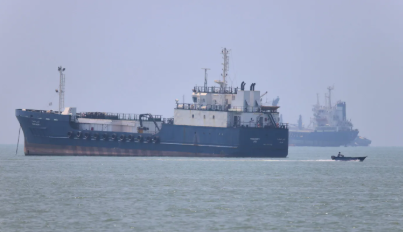
A top US energy official has reported major disruptions to one of the world’s most critical oil transit routes, warning that normal shipping flows through the Strait of Hormuz could face delays amid growing security concerns in the region.
According to statements attributed to US Energy official Wright, approximately 72 ships crossed the Strait of Hormuz in the last 24 hours, carrying approximately 20 million barrels of crude oil.
Despite the continued movement of vessels, the official warned that the resumption of normal oil flows could be delayed due to reported naval dangers, including the presence of Iranian mines in the strategic waterway.
The statement has raised new concerns about the stability of global energy supplies, given the Strait of Hormuz’s critical role in international oil shipping.
A critical global energy choke point
The Strait of Hormuz is one of the world’s most important maritime chokepoints, connecting the Persian Gulf with the Gulf of Oman and the Arabian Sea.
About a significant portion of global oil shipments pass through the narrow waterway, making it a vital route for energy exports from major Middle East producers.
Any disruption in the strait has the potential to impact global oil prices, supply chains and energy security in multiple regions.
The latest developments have therefore caught the attention of governments, energy companies and global markets.
High volume of oil shipments continues
Despite rising tensions, shipping activity through the strait has continued, with dozens of vessels carrying large volumes of crude oil.
The reported figure of 72 ships carrying approximately 20 million barrels of oil in a single day underlines the route’s continued importance to global energy flows.
Oil transported through the Strait of Hormuz is destined for markets in Asia, Europe and other regions, making uninterrupted access critical to the stability of global supply.
However, the potential for disruption remains a key concern among energy analysts.
Safety concerns over maritime hazards
The warning about possible Iranian mines in the Strait of Hormuz has raised concerns about maritime security in the region.
Naval mines are a significant threat to commercial shipping as they can disrupt shipping routes and pose risks to ships passing through busy waters.
While no widespread closure of the strait has been reported, the presence of such dangers could lead to greater caution among maritime operators and insurers.
This may result in slower transit times, vessel diversions, or increased shipping costs due to elevated risk premiums.
Possible delays in oil flow normalization
According to the US energy official’s statements, the normalization of oil flows through the strait may be delayed due to these security concerns.
Even without a complete closure of the waterway, heightened risk conditions can significantly impact the efficiency of maritime operations.
Shipping companies can implement additional safety protocols, including convoy operations, enhanced navigation procedures and increased monitoring of maritime conditions.
These measures, while improving safety, can contribute to logistical delays and higher operational costs.
Sensitivity of the world oil market
The global oil market is very sensitive to disruptions in the Strait of Hormuz due to its strategic importance in energy transportation.
Even the perception of risk in the region can cause fluctuations in oil prices as traders factor in potential supply constraints.
Energy markets typically react quickly to geopolitical developments, particularly those involving key transit routes or important producing regions.
As a result, statements regarding maritime security in the strait are closely monitored by investors and policymakers alike.
 |
| Source: Xpost |
Geopolitical tensions in the region
The Strait of Hormuz has long been a focal point of geopolitical tension due to its strategic importance and proximity to several major oil-producing countries.
Historically, periodic disputes and security incidents in the region have raised concerns about potential disruptions to global energy supplies.
While shipping has continued in the current situation, the latest warning adds to the current uncertainty around regional stability.
Historically, diplomatic and security efforts have played a key role in maintaining open access to the waterway.
Impact on energy prices
Any sustained disruption or perceived risk to oil flows through the Strait of Hormuz could have implications for global energy prices.
Oil markets typically respond to supply-side risks with increased volatility, especially when the disruption involves a major transit bottleneck.
Even temporary shipping delays can influence near-term price dynamics, depending on the scale and duration of the disruption.
Market participants are likely to continue to closely monitor developments in the situation for signs of escalation or stabilization.
Adjustments in the shipping industry
In response to elevated risk conditions, shipping companies can adjust their operating strategies to mitigate potential disruptions.
These adjustments may include better insurance coverage, alternative route strategies and greater coordination with maritime security forces.
While these measures help maintain trade continuity, they can also increase costs and reduce efficiency in global supply chains.
The energy transportation sector is particularly sensitive to such changes due to the high value and strategic importance of oil cargoes.
Broader energy security concerns
The situation in the Strait of Hormuz highlights broader concerns about global energy security and the vulnerability of key supply routes.
As global energy demand continues to grow, the importance of safe and stable transportation corridors becomes increasingly critical.
Any disruption in major hotspots can have cascading effects on global markets, affecting transportation, manufacturing and consumer prices.
This underlines the interconnected nature of global energy systems.
Market monitoring and risk assessment
Energy analysts and traders are expected to closely monitor developments in the Strait of Hormuz for further signs of disruption or stabilization.
Risk assessments will likely take into account both physical security conditions and geopolitical developments in the region.
Insurance premiums for vessels operating in the area can also be adjusted according to perceived risk levels.
These factors collectively contribute to the overall cost structure of global oil transportation.
Conclusion
A U.S. energy official’s report highlighting the passage of 72 ships carrying 20 million barrels of oil through the Strait of Hormuz underscores the continued importance of this critical energy corridor.
However, warnings about possible delays to normal oil flows due to reported maritime hazards have raised new concerns about global energy stability.
While shipping activity has not stopped, the presence of safety risks could affect efficiency, increase costs and contribute to market volatility.
As one of the world’s most important oil transit routes, developments in the Strait of Hormuz will be closely watched by governments, energy markets and global investors in the coming days.
hoka.news – not just cryptocurrency news. It’s cryptoculture.
Writer @Victoria
Victoria Hale is a writer focused on blockchain and digital technology. It is known for its ability to simplify complex technological developments into clear, easy-to-understand and attractive-to-read content.
Through her writing, Victoria covers the latest trends, innovations and developments in the digital ecosystem, as well as their impact on the future of finance and technology. It also explores how new technologies are changing the way people interact in the digital world.
His writing style is simple, informative, and focuses on giving readers a clear understanding of the rapidly evolving world of technology.
Disclaimer:
HOKA.NEWS articles are here to keep you up to date on the latest rumors in crypto, technology, and more, but they are not financial advice. We share information, trends and knowledge, we don’t tell you to buy, sell or invest. Always do your own homework before making any money moves.
HOKA.NEWS is not responsible for any loss, profit or chaos that may occur if you act on what you read here. Investment decisions should arise from your own research and, ideally, the guidance of a qualified financial advisor. Remember: cryptocurrencies and technology move fast, information changes in the blink of an eye, and while we strive for accuracy, we cannot promise that it is 100% complete or up-to-date.

