


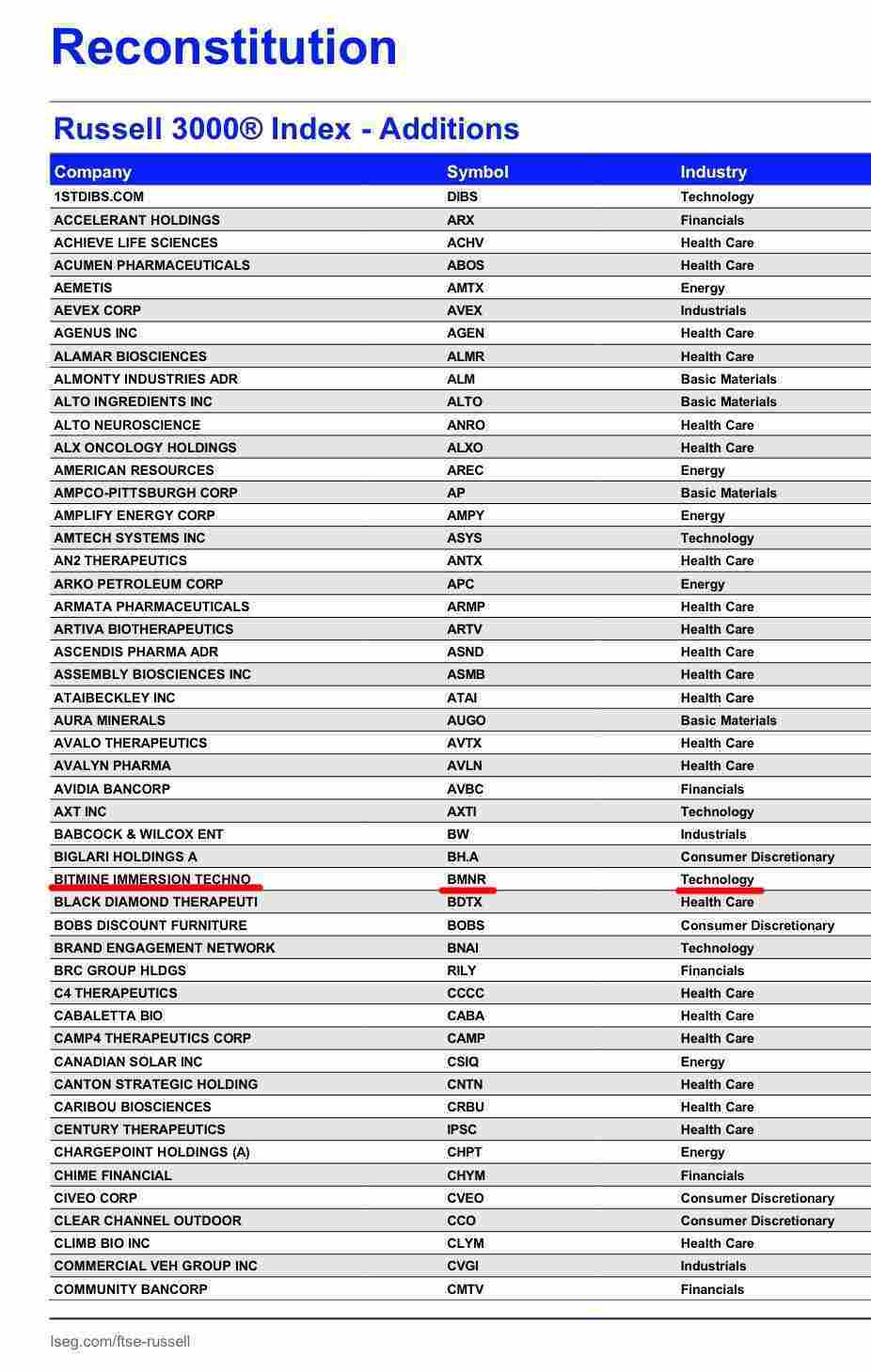
FTSE Russell has shortlisted Sharplink, Forward Industries, Gemini, Bitmine and Galaxy Digital for inclusion in its small-cap indices, a structural development with direct implications for Ethereum traders monitoring the flow of institutional liquidity in the stock market.
The 2026 US index restructuring takes effect at the end of June, with the final rebalancing expected on June 27. Passive funds that track the Russell 2000 and Russell 3000 indices will be forced to purchase shares of any companies confirmed to be added.
LAST: SharpLink and Forward Industries will join the Russell 2000 and 3000 at the end of June, expanding the index’s exposure to non-Bitcoin crypto cash companies. pic.twitter.com/isgTrk1Ge8
– CoinMarketCap (@CoinMarketCap) May 27, 2026
Passive funds’ participation in financial instruments linked to Russell indices is estimated to be between 20% and 25% of the publicly traded shares of newly listed names, a mechanical demand that occurs regardless of the stock’s market price.
Index Rebalancing Mechanisms: How Forced Buying Creates an Opportunity for Ethereum?
The annual restructuring process of the FTSE Russell American indices is based on a fixed timetable; Initial lists appear in May and final members are determined after the ranking date at the end of May. The rebalancing becomes effective during the last week of June, which is one of the largest single-day mechanical trading events for U.S. stocks, historically generating billions of dollars in flows as fund managers adjust their portfolios to match the new index weightings.
For crypto-related businesses, the mechanism seems simple but its implications are multidimensional. Once a company like Sharplink or Forward Industries is confirmed to have joined the Russell 2000, every ETF and mutual fund that tracks that index must purchase shares before the close of the restructuring day, with no option to opt out.

https://twitter.com/WuBlockchain/status/2058735681208541611/photo/1
The volume of forced buying is directly related to a company’s market cap relative to its weighting in the index, and for small-cap crypto stocks that have seen a recent rally, these weightings can be very influential.
Bitmine’s situation makes this clear, as the company revealed its holding of 5.28 million Ethereum (ETH), with total cryptocurrency and cash reserves estimated at $12.6 billion. This makes it a de facto clean move for Ethereum a few weeks before the restructuring window.
Therefore, a passive fund that purchases Bitmine shares gains indirect exposure to Ethereum, whether or not it has a mandate to directly hold the digital asset. This transport channel constitutes the most significant structural innovation in this context.
Arbitration desks have been trading Russell’s listing and delisting forecasts for years, often building positions in the weeks leading up to the rating date and then liquidating them after a restructuring. With crypto-related names now on preliminary lists, this arbitrage activity will add to what is already happening in the Ethereum spot and futures markets.
The window of volatility towards the end of June is already marked on the calendar, and the only question remaining is how many companies will survive to make the final list.
The article Ethereum and anticipation of the restructuring of the Russell 2000 index: institutional purchases arrive appeared first on Cryptonews Arabic.

