


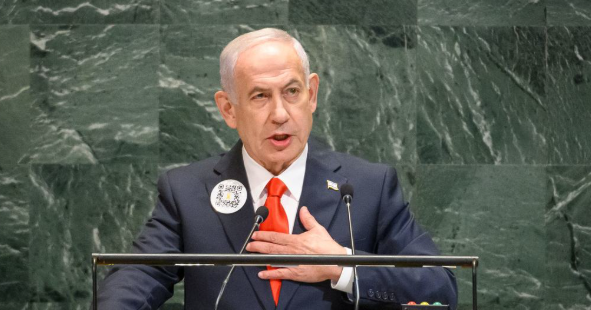
Netanyahu proposes new oil and gas pipeline route to avoid Iran and Strait of Hormuz
Israeli Prime Minister Benjamin Netanyahu has proposed a new regional energy initiative that would involve building oil and gas pipelines along the Arabian Peninsula, with the goal of transporting energy supplies directly to Israeli ports without passing through the Strait of Hormuz. The proposal is seen as a strategic effort to reduce reliance on one of the world’s most critical and vulnerable maritime chokepoints and limit exposure to potential Iran-related disruptions.
The plan would reportedly establish land routes connecting key energy-producing regions in the Gulf with Israel’s Mediterranean coast. Such a project could significantly reshape regional energy logistics, offering an alternative to traditional shipping routes passing through the Strait of Hormuz, where geopolitical tensions have periodically raised concerns about supply disruptions.
The development gained further visibility after being highlighted by the Coin Bureau account on social platform
As global energy markets remain sensitive to regional instability, proposals aiming to diversify transportation routes are attracting increasing attention from policymakers and industry stakeholders.
 |
| Source: XPost |
Strategic importance of the Strait of Hormuz
The Strait of Hormuz is one of the most important points in the world for oil transit.
A significant part of the world’s oil supply passes through it.
Any disruption in this region can have immediate effects on global energy prices.
Concerns about security and stability have long influenced energy strategies.
The proposed pipeline concept
Netanyahu’s proposal focuses on the creation of land pipelines that would avoid sea routes.
These pipelines would transport oil and gas directly to Israeli ports.
Such infrastructure could provide a safer and more controlled route for energy exports.
Geopolitical implications
The proposal carries important geopolitical implications.
By reducing dependence on routes close to Iran, it aims to mitigate potential risks.
However, it also introduces new dynamics in regional relations.
Economic and market impact
If implemented, the project could influence global energy markets.
Alternative routes may affect price and supply dynamics.
Investors and analysts are closely monitoring these developments.
Regional Cooperation
The success of the initiative will likely depend on cooperation between several countries.
Building pipelines across the Arabian Peninsula would require agreements and coordination.
Challenges and considerations
Large-scale infrastructure projects face numerous challenges.
These include financing, regulatory approvals and technical complexities.
Geopolitical considerations may also play a role.
Industry and analyst perspectives
The proposal has generated discussion among energy experts.
Analysts are evaluating its viability and possible impact.
The update gained additional visibility after being highlighted by the Coin Bureau account on X.
The Hokanews editorial team subsequently reviewed and cited the information in its coverage of global events.
Broader trends in energy security
Countries are increasingly seeking to diversify energy routes.
Reducing reliance on single transit points is a key objective.
This aligns with broader trends in energy security.
Looking to the future
More details about the proposal may emerge over time.
Its implementation would depend on multiple factors.
Conclusion
Netanyahu’s proposal to build oil and gas pipelines along the Arabian Peninsula represents a strategic effort to avoid the Strait of Hormuz and reduce exposure to geopolitical risks associated with Iran.
The development gained attention after being highlighted by the Coin Bureau account on social platform X and was later cited by the Hokanews editorial team in its report on global energy trends.
As discussions continue, the proposal highlights the changing nature of energy infrastructure and geopolitical strategy.
hokanews.com – Not just cryptocurrency news. It’s cryptoculture.
Writer @Ethan
Ethan Collins is a passionate crypto journalist and blockchain enthusiast, always on the hunt for the latest trends revolutionizing the world of digital finance. With a knack for turning complex blockchain developments into engaging, easy-to-understand stories, he keeps readers ahead of the curve in the fast-paced crypto universe. Whether it’s Bitcoin, Ethereum, or emerging altcoins, Ethan dives deep into the markets to uncover ideas, rumors, and opportunities that matter to cryptocurrency fans everywhere.
Disclaimer:
HOKANEWS articles are here to keep you up to date on the latest rumors in crypto, technology, and more, but they are not financial advice. We share information, trends and knowledge, we don’t tell you to buy, sell or invest. Always do your own homework before making any money moves.
HOKANEWS is not responsible for any loss, gain or chaos that may occur if you act on what you read here. Investment decisions should arise from your own research and, ideally, the guidance of a qualified financial advisor. Remember: cryptocurrencies and technology move fast, information changes in the blink of an eye, and while we strive for accuracy, we cannot promise that it is 100% complete or up-to-date.

