
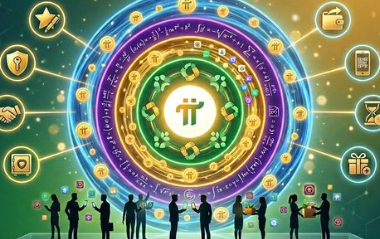
Pi Network is positioned as a potential global driver of dApps in the future expansion of Web3
The Pi Network ecosystem continues to generate strong community debate about its long-term vision and potential role in the future of Web3 infrastructure. A recent statement shared by ETNnigeria has sparked renewed attention by suggesting that the Pi Network could ultimately evolve into a global decentralized application (dApp) engine powering digital ecosystems around the world.
While this outlook reflects community sentiment rather than official technical confirmation, it highlights growing expectations around the future direction and scalability of the project within the blockchain space.
Vision of Pi Network as a dApps infrastructure layer
The idea of ​​Pi Network becoming a global dApp engine refers to its potential role as a fundamental platform for decentralized applications.
In blockchain ecosystems, a dApp engine typically provides the underlying infrastructure that allows developers to build, deploy, and scale decentralized applications. These applications may include financial tools, marketplaces, social platforms, and various utility-based services.
Within this vision, the Pi Network would serve as more than a digital asset system. Rather, it would function as a broader technology layer that would support a wide range of applications and services.
This concept aligns with the evolutionary direction of Web3, where blockchain platforms aim to support entire ecosystems of interconnected applications rather than isolated use cases.
Community expectations around massive ecosystem growth
The statement shared within the community emphasizes expectations for significant future growth within the Pi Network ecosystem.
Supporters often view the project as being in a long-term development phase, where infrastructure is being built gradually to support large-scale adoption in the future.
This perspective suggests that current developments may represent fundamental stages rather than the end result of the ecosystem.
In many blockchain projects, early infrastructure development is critical to enable future scalability and support complex application ecosystems.
Trust in the leadership of the core development team
Another key element highlighted in the discussion is trust in the core development team.
In the development of decentralized ecosystems, the core team often plays an important role in defining the technical architecture, guiding the growth of the ecosystem, and ensuring system stability.
Community members often express confidence in the long-term development roadmap and strategy, especially during the initial or evolution phases of a project.
This trust-based dynamic is common in emerging blockchain ecosystems where full functionality is still being built and refined over time.
Web3 context and role of dApp ecosystems
The concept of a global dApp engine fits into broader Web3 development trends.
Web3 ecosystems are increasingly focused on enabling decentralized applications that operate without centralized control. These applications rely on blockchain infrastructure to manage data, transactions, and user interactions.
Platforms that successfully support large-scale dApp ecosystems often become core infrastructure layers within the Web3 landscape.
If Pi Network were to evolve in this direction, it would position itself within a competitive and rapidly expanding segment of blockchain technology.
Infrastructure requirements for a global dApp engine
Becoming a global dApp engine requires a robust and scalable infrastructure capable of supporting large volumes of applications and users.
Key requirements typically include efficient transaction processing, development tools, smart contract functionality, and ecosystem interoperability.
Additionally, easy-to-use development environments and strong community involvement are often essential for ecosystem expansion.
These elements work together to create an environment where developers can create applications that serve real-world use cases.
| Source: Xpost |
Ecosystem expansion through application development
A central aspect of the dApp engine concept is the expansion of ecosystem activity through application development.
As more developers build a platform, the number of use cases increases, creating greater utility for the underlying network.
This cycle of development and adoption is a key driver of growth in successful blockchain ecosystems.
In the context of the Pi Network, community discussions often highlight the importance of encouraging developers and users to participate in building the ecosystem.
Long-term development perspective
The vision of Pi Network as a global dApp engine reflects a long-term development perspective rather than immediate functionality.
Blockchain ecosystems often require extended periods of infrastructure construction before reaching large-scale adoption.
During these phases, systems are tested, refined, and expanded to ensure they can support larger user bases and more complex applications.
This incremental approach is common in emerging technologies where scalability and reliability are critical success factors.
Market Interpretation and Community Sentiment
Within the broader community, interpretations of the Pi Network’s future role vary, but many discussions focus on its potential as a foundational Web3 platform.
Supporters often emphasize the importance of patience and long-term observation, particularly when evaluating early-stage ecosystems.
At the same time, expectations of significant future growth remain a recurring theme in community discussions.
This combination of optimism and long-term perspective contributes to continued engagement within the ecosystem.
Challenges in building a global blockchain infrastructure
Despite the optimistic vision, building a global dApp engine comes with significant challenges.
These include technical scalability, security, developer adoption, regulatory considerations, and ecosystem maturity.
Each of these factors plays a critical role in determining whether a blockchain platform can successfully move from initial development to global infrastructure status.
As with any large-scale system, progress usually occurs in stages rather than through immediate transformation.
Conclusion
The idea of ​​Pi Network evolving into a global dApp engine reflects a broader vision of Web3 infrastructure development where blockchain platforms serve as foundational layers for decentralized applications.
While this outlook is largely community-driven, it highlights growing expectations around the project’s long-term potential and ecosystem expansion.
As development continues, the focus remains on building infrastructure, growing applications, and preparing the ecosystem.
Ultimately, the transition to a large-scale dApp ecosystem would depend on sustained development, developer engagement, and long-term adoption within the broader Web3 landscape.
hoka.news – not just cryptocurrency news. It’s cryptoculture.
Writer @Victoria
Victoria Hale is a writer focused on blockchain and digital technology. It is known for its ability to simplify complex technological developments into clear, easy-to-understand and engaging-to-read content.
Through her writing, Victoria covers the latest trends, innovations and developments in the digital ecosystem, as well as their impact on the future of finance and technology. It also explores how new technologies are changing the way people interact in the digital world.
His writing style is simple, informative, and focuses on giving readers a clear understanding of the rapidly evolving world of technology.
Disclaimer:
HOKA.NEWS articles are here to keep you up to date on the latest rumors in crypto, technology, and more, but they are not financial advice. We share information, trends and knowledge, we don’t tell you to buy, sell or invest. Always do your own homework before making any money moves.
HOKA.NEWS is not responsible for any loss, profit or chaos that may occur if you act on what you read here. Investment decisions should arise from your own research and, ideally, the guidance of a qualified financial advisor. Remember: cryptocurrencies and technology move fast, information changes in the blink of an eye, and while we strive for accuracy, we cannot promise that it is 100% complete or up-to-date.

