


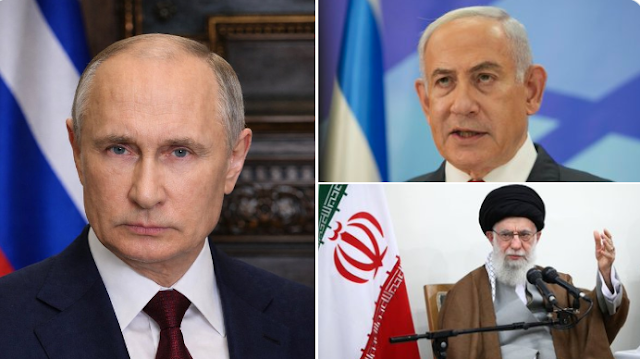
Putin signals willingness to mediate growing tensions between Israel and Iran
russian president Vladimir Putin has indicated that Moscow is willing to act as a mediator amid the escalation of tensions between Israel and Iranadding a new diplomatic dimension to one of the world’s most volatile regional confrontations.
The offer, according to people familiar with the matter, reflects Russia’s intention to position itself as a key diplomatic player at a time when relations across the Middle East remain fragile and highly unpredictable. The development was first highlighted by international observers and later confirmed through reports cited by BRICS Newsand the hokanews editorial team reviews information before citing it.
 |
| Source: XPost |
A diplomatic signal at a delicate moment
Tensions between Israel and Iran have escalated in recent months, fueled by regional conflicts, military activity and competing strategic interests. While both countries have largely avoided large-scale direct confrontation, the risk of miscalculations remains a persistent concern for regional and global powers.
Putin’s signal of willingness to mediate comes as Russia seeks to maintain its diplomatic relevance in the Middle East despite being heavily engaged elsewhere on the global stage.
“This is a classic Russian diplomatic move,” said one foreign policy analyst. “Moscow offers itself as a communication channel at a time when trust between the parties is extremely low.”
Russia’s strategic interests in the Middle East
Russia has cultivated relations with both Israel and Iran for many years, navigating a delicate balancing act that has allowed it to maintain dialogue with its rivals simultaneously.
With Israel, Russia has coordinated military activity in the region to avoid direct confrontations, particularly in areas where Russian forces have been active. With Iran, Moscow has developed closer strategic and economic ties, including cooperation on regional security issues.
This dual commitment puts Russia in an unusual position to communicate with both sides, although analysts warn that mediation would face significant obstacles.
“Access does not equal influence,” said one regional security expert. “But it does provide an opportunity.”
Israel and Iran at an impasse
Israel has long considered Iran a major strategic threat, citing concerns about regional influence and military capabilities. Meanwhile, Iran has positioned itself as a central player in regional politics, often framing its actions as resistance to Western and Israeli pressure.
Diplomatic channels between the two countries are limited and public rhetoric from both sides remains confrontational. Any mediation effort would therefore require careful coordination and confidence-building measures, experts say.
“Even indirect talks would be a significant step,” said one Middle East analyst. “The question is whether either side sees an advantage in participating.”
The role of global powers
Putin’s offer also reflects broader changes in global diplomacy, as traditional mediators face limitations and new actors seek to fill the void. Russia’s involvement could complicate existing diplomatic frameworks, but it could also provide an alternative avenue to reduce tension.
Some observers believe Moscow’s move is intended as much as an international signal as practical mediation.
“Russia wants to be considered indispensable,” said one geopolitical strategist. “Offering mediation reinforces that image.”
Skepticism and cautious reactions
Initial reactions among analysts have been mixed. Some see the offer as a constructive step that could reduce tensions if handled carefully. Others question whether all parties involved can perceive Russia as neutral.
“Mediation requires trust,” said one former diplomat. “And trust is in short supply right now.”
Neither Israel nor Iran have publicly responded in detail to the mediation offer, and it remains unclear whether formal talks could materialize.
Implications for regional stability
If carried out, Russian mediation could influence not only Israel-Iran relations but also the broader regional balance. Neighboring countries and global markets are closely monitoring developments, given the potential impact on energy security, trade routes and geopolitical alignment.
Even limited dialogue could reduce the risk of a sudden escalation, analysts say, although expectations remain tempered.
“Sometimes mediation is successful by simply slowing things down,” said one conflict resolution specialist.
What comes next?
For now, Putin’s offer is more of a diplomatic signal than a formal initiative. Any progress would depend on behind-the-scenes compromise and the willingness of all parties to explore de-escalation.
As tensions continue to rise, the possibility of mediation highlights the ongoing search for stability in a region where diplomacy often competes with confrontation.
The hokanews team will continue to monitor developments as more information becomes available.
hokanews.com – Not just cryptocurrency news. It’s cryptoculture.
Writer @Ethan
Ethan Collins is a passionate crypto journalist and blockchain enthusiast, always on the hunt for the latest trends revolutionizing the world of digital finance. With a knack for turning complex blockchain developments into engaging, easy-to-understand stories, he keeps readers ahead of the curve in the fast-paced crypto universe. Whether it’s Bitcoin, Ethereum, or emerging altcoins, Ethan dives deep into the markets to uncover ideas, rumors, and opportunities that matter to cryptocurrency fans everywhere.
Disclaimer:
HOKANEWS articles are here to keep you up to date on the latest rumors in crypto, technology, and more, but they are not financial advice. We share information, trends and knowledge, we don’t tell you to buy, sell or invest. Always do your own homework before making any money moves.
HOKANEWS is not responsible for any loss, gain or chaos that may occur if you act on what you read here. Investment decisions should arise from your own research and, ideally, the guidance of a qualified financial advisor. Remember: cryptocurrencies and technology move fast, information changes in the blink of an eye, and while we strive for accuracy, we cannot promise that it is 100% complete or up-to-date.

