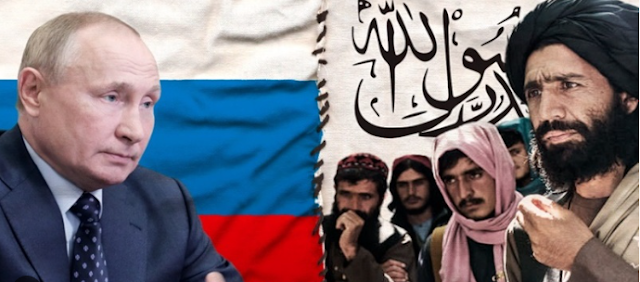
Russia calls for de-escalation of tensions between Pakistan and Taliban amid rising border tensions
Russia has urged both Pakistan and the taliban exercise restraint and reduce tensions following recent cross-border developments that have heightened security concerns in the region.
The call for calm was highlighted by the X BRICS News account and then independently reviewed before being cited by Hokanews in its ongoing coverage of South Asia’s geopolitical dynamics. Russian officials have emphasized the importance of dialogue and stability, particularly in a region already facing complex security challenges.
The statement underscores Moscow’s interest in avoiding further instability along the Afghanistan-Pakistan border, an area that has historically experienced volatility and militant activity.
 |
| Source: XPost |
Background of rising tensions
Recent weeks have seen an escalation of rhetoric and security incidents between Pakistan and Afghanistan’s Taliban-led administration. Accusations of cross-border activity, the publication of controversial images and mutual accusations have intensified diplomatic friction.
Pakistan has repeatedly expressed concern about militant groups operating near or across its border. The Taliban, in turn, have made their own claims about security operations and regional dynamics.
In this context, Russia’s call for a reduction in tension appears to be aimed at preventing further deterioration that could destabilize the broader region.
Russia’s strategic interests
Russia maintains strategic interests in Central and South Asia, including concerns over terrorism, regional stability, and economic connectivity.
Moscow has engaged in diplomatic contacts with various actors in Afghanistan since the Taliban regained control of the country. While Russia has not formally recognized the Taliban government, it has maintained channels of communication.
Instability along the Afghanistan-Pakistan border has implications for regional security networks and trade corridors.
By urging restraint, Russia signals its preference for diplomatic solutions to military escalation.
Regional security concerns
The Afghanistan-Pakistan border has long been a hotbed of militant activity and cross-border disputes.
The porous and mountainous terrain complicates law enforcement and surveillance, contributing to recurring tensions.
Escalation risks not only bilateral tensions but also broader regional consequences.
Neighboring countries and world powers often advocate calm when cross-border accusations escalate.
Diplomatic importance
Calls for a reduction in tensions by external powers can serve as informal signals of mediation.
While Russia has not announced formal mediation efforts, public calls for restraint often precede behind-the-scenes diplomatic engagement.
Such statements may also reflect broader geopolitical positioning, as major powers seek to maintain influence in strategically important regions.
The call, first highlighted by BRICS News and then independently reviewed and cited by Hokanews, illustrates how global stakeholders are closely following developments.
Implications for Pakistan and the Taliban
For Pakistan, balancing internal security with diplomatic engagement remains a priority.
For the Taliban administration, maintaining regional relations is crucial for political and economic stability.
The escalation could strain already fragile ties and disrupt cross-border trade and humanitarian coordination.
A path to de-escalation would likely involve security dialogues, reaffirmed border management protocols and direct lines of communication.
International reaction
The international community has consistently emphasized the need for stability in South Asia.
Organizations focused on counterterrorism and regional development see sustained conflict as a threat to progress.
Russia’s public statement aligns with broader calls from global actors urging moderation and dialogue.
Conclusion
Russia’s call for Pakistan and the Taliban to de-escalate tensions reflects growing concern over rising tensions along the Afghanistan-Pakistan border.
The call, initially highlighted by BRICS News and later independently reviewed and cited by Hokanews, underlines the international dimension of what could otherwise remain a bilateral dispute.
As long as diplomatic channels remain open, the next few days will be critical in determining whether dialogue prevails or whether tensions escalate further.