


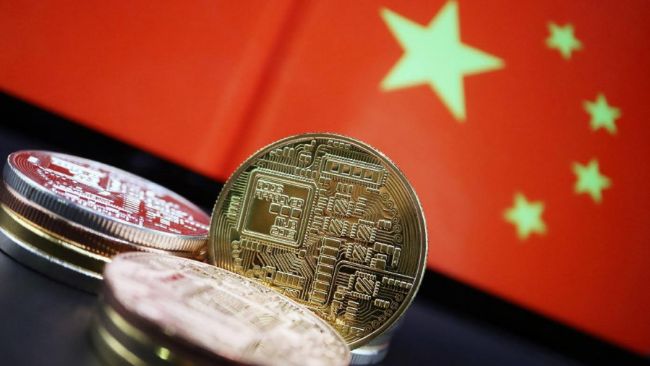
Chinese financial associations have jointly declared that tokenization of real-world assets (RWA) is illegal under current national regulations. A new risk warning issued by seven major industry bodies has confirmed that RWA falls into the category of prohibited virtual currency activities. The statement brings clarity to regulatory treatment and signals a full enforcement posture against RWA in domestic and offshore operations.
Cross-sector warning identifies RWA as illegal activity
The notice was co-signed by seven associations, including the Internet Finance Association, the Securities Association and the Payment & Clearing Association. The document refers to RWA as a financing and trading activity, placing it alongside stablecoins and aircoins. Officials said no RWA projects were approved under Chinese law and the model was classified as high risk.
The disclaimer defines RWA as the issuance of tokens or debt-like certificates linked to physical assets for trading or fundraising purposes. Regulators have cited risks of fraud, operational failure and speculation, saying compliance mechanisms cannot eliminate these risks. The statement explicitly states: “No real-world asset tokenization activities have been approved by Chinese financial regulators.”
The authorities have made it clear that this is not a temporary measure or a waiting period. The document excludes future regulatory filings or approvals for RWA projects operating in the country – the notice categorizes these activities as violating existing securities law and financial prohibitions.
Legal implications extend to platforms and service providers
The statement identifies three legal issues associated with RWA models: illegal fundraising, unauthorized securities issuance, and illegal futures activities. These fall under violations defined in Chinese law and align with previous cases and enforcement decisions. The document clarified that even technically structured or offshore models would not be exempt from sanctions.
He warned that any project issuing RWA tokens and distributing them to the public could trigger criminal fundraising charges. Those offering unlicensed trading platforms or securities-like products could be charged with illegal issuance. If token activity involves leverage or speculation, regulators may treat it as illegal futures trading.
The warning also addressed promotional and intermediary roles, citing the responsibility of domestic entities supporting RWA services, knowingly or unknowingly. Legal liability applies not only to token issuers, but also to technology companies, consultants, marketers and payment providers. The phrase “knowingly or ought to have known” establishes broad legal liability.
No safe harbor for offshore entities with operations on the continent
Authorities have targeted the model of foreign-registered entities operating through mainland teams. The document confirms that even a single domestic employee supporting an RWA project could create legal risk. This concludes the common Web3 strategy of using offshore incorporation to circumvent national regulations.
The scope of the law includes infrastructure providers, development teams, auditors, KOLs and promotional channels like WeChat or Telegram. The document emphasizes that RWA activity supported by Chinese residents constitutes local financial activity and must comply with Chinese law. He denied the idea that providers of purely technological services would be exempt from liability.
This eliminates the legal basis for any China-related RWA ecosystem, including token issuers and third-party providers. Teams hoping to pursue such activities must relocate completely outside China with complete structural independence. The government’s position leaves no room for incremental compliance or conditional experimentation.
Document signals end of RWA viability in China
The warning emphasizes that the risks of RWA outweigh its technological benefits. It does not mention sandboxing, pilot programs or flexible monitoring of future trials. The position closes the door to any regulatory accommodation or future inclusion of tokenized assets. The document further notes that criminals use RWA claims to promote fundraising schemes and fraudulent operations.
Projects that still recruit partners or community representatives under the RWA label now fall within the definition of illegal activities. This includes any solicitation via social platforms or messaging groups. Lawyer Honglin, who had spoken about RWA scams in previous broadcasts, confirmed the sudden scope and severity of the new warning. He noted that the participation of seven high-level alliances represents a rare and coordinated consensus on enforcement.
The statement presents RWA as a clear financial threat alongside previously banned crypto activities. Service providers are encouraged to recognize that the technical structure does not protect them from legal risks. Regulators reject arguments around compliance layers or asset transparency if tokenization remains the core model. The authorities have given priority to risk management rather than technological innovation in their application roadmap.

