


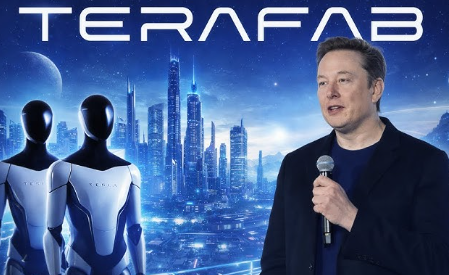
SpaceX reportedly plans massive $55 billion semiconductor facility in Texas, marking possible shift toward advanced chip manufacturing
Texas – SpaceX is reportedly preparing to enter the semiconductor industry with an ambitious proposal to invest $55 billion in building a large-scale chip manufacturing facility, internally called “Terafab.” If completed, the project could represent one of the largest private sector investments in advanced semiconductor production in the United States.
According to early industry discussions and market comments circulating online, the total cost of the project could reach $119 billion if future expansion phases and additional infrastructure development are included. The scale of the proposed investment has attracted widespread attention in both the technology and financial sectors.
The facility is expected to be located in Texas, a state that has become a growing center for high-tech manufacturing, including semiconductor manufacturing, electric vehicle production and aerospace development. Texas has increasingly attracted large-scale investment due to its business-friendly environment, access to industrial land, and expanding technology workforce.
If completed, the Terafab project would mark a significant diversification for SpaceX, a company known primarily for its aerospace and space exploration initiatives. Founded by Elon Musk, SpaceX has traditionally focused on rocket manufacturing, satellite deployment through its Starlink network, and space transportation systems.
The reported move toward semiconductor manufacturing signals a potential strategic expansion into one of the most critical sectors of global technology infrastructure. Semiconductors are essential components in almost all modern electronic devices, including smartphones, artificial intelligence systems, defense technologies, and space exploration equipment.
Industry analysts suggest that controlling or significantly participating in semiconductor production could offer strategic advantages for companies involved in advanced computing, artificial intelligence and aerospace systems. Chips are increasingly seen as critical infrastructure for next-generation technology development.
 |
| Source: Xpost |
The proposed investment also comes at a time when global semiconductor supply chains are undergoing major restructuring. Geopolitical tensions, supply chain disruptions and growing demand for advanced chips have led governments and private companies to invest heavily in domestic manufacturing capabilities.
The United States has been actively encouraging domestic semiconductor production through incentive policies and financing initiatives aimed at reducing dependence on foreign manufacturing. In this context, a large-scale private investment such as the reported Terafab project could be aligned with broader national strategic objectives.
While official details remain limited, early reports suggest the facility would focus on advanced chip production technologies. These could include processors used in artificial intelligence applications, high-performance computing systems, and specialized hardware for aerospace and satellite operations.
The projected scale of the investment indicates that the facility would likely be among the largest semiconductor manufacturing sites in the world if completed. Expansion phases could further increase its capacity and technological capabilities over time.
Market watchers have noted that the semiconductor industry is one of the most capital-intensive sectors in the global economy. Building advanced manufacturing plants requires not only massive financial investment, but also highly specialized engineering expertise, supply chain coordination, and long-term operational planning.
The project’s total estimate of $119 billion, including future expansion, underscores the complexity and ambition associated with such an undertaking. For comparison, some of the largest existing semiconductor facilities globally operate at significantly lower total investment levels.
Industry commentary circulating within financial and technology circles, including references shared on platforms like While not an official confirmation, such discussions reflect broader speculation about the strategic direction of major technology companies.
If SpaceX proceeds with the Terafab project, it could potentially integrate semiconductor manufacturing with its existing aerospace and satellite operations. This vertical integration could improve supply chain control and reduce dependence on third-party chip suppliers for critical systems.
Semiconductors are particularly important in aerospace applications, where high performance, durability and reliability are essential. Spacecraft systems, satellite communications, and autonomous navigation technologies rely heavily on advanced chip architectures.
Expanding into chip manufacturing could also position SpaceX within the rapidly growing AI hardware ecosystem. AI development requires specialized processors capable of handling large-scale computing workloads, an area currently dominated by a small number of global manufacturers.
Texas, as the proposed location for the facility, has already become a major center for semiconductor investment. Several leading technology companies have announced or completed large-scale chip manufacturing projects in the state in recent years, contributing to its growing reputation as a national semiconductor hub.
The potential economic impact of a project of this magnitude would likely be significant. Large-scale semiconductor facilities typically generate thousands of high-skilled jobs, stimulate local supply chains, and attract additional investment from related industries.
However, these projects also face substantial challenges. Semiconductor manufacturing requires precise environmental conditions, complex equipment installation, and long development timelines. Construction and operational scale-up may take several years before full production capacity is reached.
Regulatory approvals, environmental assessments and supply chain coordination are also critical components of any large semiconductor initiative. These factors often influence final project timelines and costs.
Despite these challenges, growing demand for advanced chips continues to drive investment across the global technology sector. Artificial intelligence, autonomous systems, and next-generation communication networks are expected to significantly increase semiconductor consumption in the next decade.
The SpaceX initiative reflects a broader trend of convergence between the aerospace, artificial intelligence and semiconductor industries. As technology systems become more integrated, companies are increasingly exploring vertical expansion into critical infrastructure sectors.
While official confirmation and detailed timelines for the project have yet to be released, the scale of the reported investment has already sparked widespread debate in financial and technology markets. Analysts continue to closely monitor developments as more information becomes available.
hoka.news – not just cryptocurrency news. It’s cryptoculture.
Writer @Victoria
Victoria Hale is a writer focused on blockchain and digital technology. It is known for its ability to simplify complex technological developments into clear, easy-to-understand and engaging-to-read content.
Through her writing, Victoria covers the latest trends, innovations and developments in the digital ecosystem, as well as their impact on the future of finance and technology. It also explores how new technologies are changing the way people interact in the digital world.
His writing style is simple, informative, and focuses on giving readers a clear understanding of the rapidly evolving world of technology.
Disclaimer:
HOKA.NEWS articles are here to keep you up to date on the latest rumors in crypto, technology, and more, but they are not financial advice. We share information, trends and knowledge, we don’t tell you to buy, sell or invest. Always do your own homework before making any money moves.
HOKA.NEWS is not responsible for any loss, profit or chaos that may occur if you act on what you read here. Investment decisions should arise from your own research and, ideally, the guidance of a qualified financial advisor. Remember: cryptocurrencies and technology move fast, information changes in the blink of an eye, and while we strive for accuracy, we cannot promise that it is 100% complete or up-to-date.

