


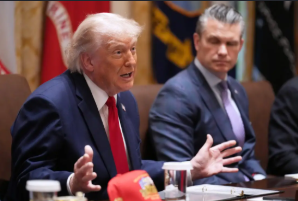
Tensions between the United States and Iran have escalated once again after the former US president. donald trump indicated that the blockade surrounding the strategically critical Strait of Hormuz would remain in force, fueling new concerns about regional stability, global energy markets and international shipping routes.
The latest developments come amid growing accusations from Iranian officials that the Trump administration violated ceasefire agreements, further complicating an already fragile geopolitical environment in the Middle East.
According to reports carried by Iran’s state-affiliated media, including the Tasnim News AgencyIranian authorities have threatened to press ahead with efforts to close the Strait of Hormuz while suspending indirect communications with Washington that had previously been carried out through diplomatic intermediaries.
The developments have attracted significant attention from global markets, energy traders, policymakers and security analysts due to the waterway’s enormous strategic importance.
Observers from across financial and geopolitical circles have been following the situation closely, including comments highlighted by the popular X Coinbureau account, underscoring concerns that any disruption in Hormuz could have far-reaching implications that would extend far beyond the region.
Why is the Strait of Hormuz important?
The Strait of Hormuz is widely considered one of the world’s most important maritime chokepoints.
Located between Iran and Oman, the narrow passage serves as a gateway connecting the Persian Gulf to the Arabian Sea and the broader global maritime network.
Huge quantities of crude oil, liquefied natural gas, refined petroleum products and commercial products pass through this waterway every day.
Energy analysts frequently describe Hormuz as one of the most strategically important locations in global trade because a significant percentage of the world’s energy exports transit the corridor.
Any threat to shipping activity within the strait can immediately affect international markets.
Oil prices, shipping insurance costs, freight rates, and general investor sentiment often react quickly to events affecting the region.
For decades, Hormuz’s strategic importance has made it a focal point of geopolitical tensions involving Iran, the United States, the Gulf States and major international powers.
Growing friction between Washington and Tehran
The latest escalation reflects the continued deterioration of relations between Washington and Tehran.
Although periods of diplomacy and negotiation have sometimes reduced tensions, disputes over sanctions, regional influence, military activities and nuclear policies have repeatedly strained relations.
Iran’s recent accusations of alleged ceasefire violations represent the latest chapter in a long confrontation that has shaped Middle East geopolitics for years.
Iranian officials have argued that actions taken by the United States undermine diplomatic progress and increase instability throughout the region.
Meanwhile, U.S. officials have consistently maintained that their policies are aimed at protecting regional security interests and maintaining freedom of navigation through critical international waterways.
Competing narratives continue to fuel uncertainty about future events.
The possible threat of closure generates global concern
Perhaps the most significant aspect of the latest developments is Iran’s indication that it may move toward closing the Strait of Hormuz.
While these types of threats have arisen periodically over the years, the prospect of real disruption continues to worry governments and markets around the world.
A significant closure or restriction of shipping activity could affect global energy supplies and create logistical challenges for international trade.
Energy-importing nations in Asia, Europe and other regions are closely monitoring developments due to their dependence on oil and gas shipments from the Persian Gulf.
Even the possibility of disruptions can influence market expectations.
Investors frequently respond to geopolitical uncertainty by adjusting their portfolios, increasing exposure to safe haven assets and reassessing risk across various sectors.
As a result, events involving Hormuz often have consequences that extend far beyond the Middle East.
Energy markets on alert
Energy traders are particularly sensitive to developments involving the Strait of Hormuz.
The waterway serves as a critical route for exports from several major oil-producing countries.
Any reduction in shipping activity could potentially tighten global supply conditions and increase price volatility.
Historically, oil markets have reacted strongly to geopolitical tensions involving the region.
While actual supply disruptions remain uncertain, traders typically factor potential risks into market prices.
Analysts note that even temporary disruptions could create significant challenges for global energy supply chains.
Therefore, the current situation remains a major focus for commodity markets, governments and multinational corporations.
 |
| Source: Xpost |
Shipping industry faces renewed uncertainty
Beyond the energy markets, international shipping companies are closely following developments.
Commercial vessels operating in or near the Persian Gulf often face increased security considerations during periods of geopolitical tension.
Insurance providers may reassess risk levels, which could increase costs for vessels transiting the region.
Higher shipping costs can ultimately impact global supply chains and consumer prices.
Maritime security experts emphasize that maintaining freedom of navigation remains a top priority for many governments and international organizations.
The importance of the Strait of Hormuz to global trade means that developments affecting maritime traffic can quickly become international concerns.
Diplomatic channels under pressure
Another notable element of the current situation has to do with Iran’s alleged decision to stop exchanging messages with the United States through intermediaries.
Indirect communication channels often play a critical role during periods of heightened stress.
These channels can help prevent misunderstandings, facilitate negotiations, and reduce the risk of unintentional escalation.
Suspending these communications could complicate efforts to manage disputes and seek diplomatic solutions.
Many international observers see dialogue as an essential component of crisis management.
Without effective communication mechanisms, resolving disagreements becomes more difficult.
This dynamic has increased concern among diplomats and regional analysts following the situation.
Financial markets react to geopolitical risk
Global financial markets often respond quickly to geopolitical events involving strategic regions.
Investors are assessing potential impacts on energy prices, trade flows, inflation and economic growth.
Periods of increased uncertainty can increase volatility in equity, commodity, currency and fixed income markets.
Therefore, the latest developments around Hormuz have attracted the attention of not only political leaders but also institutional investors and financial analysts.
Market participants are evaluating potential scenarios while monitoring official statements from governments and international organizations.
The intersection of geopolitics and economics remains a central focus for investors navigating an increasingly complex global environment.
Regional stability remains a key concern
The Middle East continues to occupy a critical position within the global geopolitical landscape.
Conflicts, diplomatic disputes and security concerns within the region often have international consequences.
The latest tensions involving Iran and the United States highlight the current challenges facing policymakers seeking to balance security interests, economic stability, and diplomatic engagement.
Regional stability remains essential not only for neighboring countries but also for global energy markets and international trade networks.
As a result, events involving Hormuz are closely followed by governments around the world.
Looking to the future
The latest escalation around the Strait of Hormuz underscores the continued importance of one of the world’s most strategically important waterways.
Statements indicating that the blockade will remain in place, combined with Iranian threats to close the passage and suspend indirect communications with Washington, have raised new concerns about regional stability and global economic implications.
While the final outcome remains uncertain, the situation highlights how quickly geopolitical tensions can influence markets, energy supplies and international trade.
Investors, policymakers, shipping companies and energy producers are expected to remain focused on developments in the coming weeks as they assess the potential impact of one of the world’s most closely watched geopolitical flashpoints.
hoka.news – not just cryptocurrency news. It’s cryptoculture.
Writer @Victoria
Victoria Hale is a writer focused on blockchain and digital technology. It is known for its ability to simplify complex technological developments into clear, easy-to-understand and engaging-to-read content.
Through her writing, Victoria covers the latest trends, innovations and developments in the digital ecosystem, as well as their impact on the future of finance and technology. It also explores how new technologies are changing the way people interact in the digital world.
His writing style is simple, informative, and focuses on giving readers a clear understanding of the rapidly evolving world of technology.
Disclaimer:
HOKA.NEWS articles are here to keep you up to date on the latest rumors in crypto, technology, and more, but they are not financial advice. We share information, trends and knowledge, we don’t tell you to buy, sell or invest. Always do your own homework before making any money moves.
HOKA.NEWS is not responsible for any loss, profit or chaos that may occur if you act on what you read here. Investment decisions should arise from your own research and, ideally, the guidance of a qualified financial advisor. Remember: cryptocurrencies and technology move fast, information changes in the blink of an eye, and while we strive for accuracy, we cannot promise that it is 100% complete or up-to-date.

