


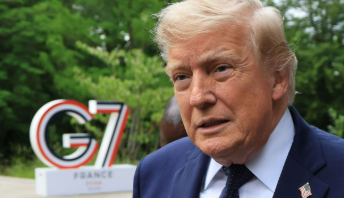
If I don’t like what I see, we will strike again,” Trump said, noting the continued uncertainty surrounding diplomatic and security developments involving Iran.
The comments have added new tension to already fragile geopolitical discussions, as global markets and foreign policy analysts closely watch for any signs of escalation or de-escalation in US-Iran relations.
The statement has also been widely circulated on political and financial discussion platforms, including comments shared through accounts such as CoinMarketCap-related feeds, where geopolitical risk is often discussed for its potential impact on the market.
Growing uncertainty surrounding US-Iran relations
The latest comments underscore the current uncertainty surrounding the state of diplomatic engagement between Washington and Tehran.
While discussions surrounding a memorandum of understanding have been reported, Trump’s comments suggest that no final agreement has been reached and that the terms remain subject to change.
This ambiguity has raised concerns among international observers about the stability of the current diplomatic process and the possibility of a new escalation.
Historically, US-Iran relations have been characterized by periods of negotiation followed by sudden ruptures, often influenced by broader regional security dynamics.
Warning of possible military action
Trump’s claim that the United States could “strike again” if it is dissatisfied with developments has attracted a lot of attention due to its direct reference to military action.
That language reflects a continuation of the hardline stance that has defined much of his previous foreign policy approach toward Iran.
While no specific operational details were provided, the comment highlights the potential for rapid changes in US policy depending on the outcome of ongoing discussions.
Analysts note that rhetoric implying possible military action often increases perceptions of geopolitical risk in global markets, particularly in the energy and financial sectors.
Markets react to geopolitical risk
Historically, geopolitical events involving the Middle East have had a strong impact on global markets, particularly oil prices and risk-sensitive assets.
Uncertainty surrounding US-Iran relations may create volatility in energy markets due to the region’s strategic importance in global oil supply chains.
Investors often monitor these developments closely as escalation risks can affect shipping lanes, energy production and the stability of global trade.
Financial analysts say that even verbal signals of a potential conflict can influence short-term market sentiment, especially in the case of commodities and digital assets.
Strategic importance of negotiations with Iran
Iran remains a key geopolitical player in the Middle East, with significant influence over regional security dynamics and energy infrastructure.
Any deal or breakdown in negotiations between the United States and Iran could have far-reaching implications for neighboring countries and global alliances.
The concept of memorandum of understanding usually points to preliminary frameworks rather than finalized treaties, meaning that further negotiations are often required before any binding agreement is reached.
Trump’s claim that the deal is “not final” reinforces the idea that current discussions remain in a fluid and unresolved stage.
 |
| Source: Xpost |
The diplomatic process is still unclear
At this stage, details about the structure, scope and implementation mechanisms of any US-Iran deal remain unclear.
Diplomatic agreements of this nature often involve multiple phases, including preliminary discussions, technical negotiations, and formal ratification processes.
Without confirmation of a finalized deal, uncertainty about the future direction of US-Iran relations is likely to persist.
Foreign policy analysts suggest that public statements by high-level officials can sometimes reflect negotiation positioning rather than final policy outcomes.
Global reaction to escalator language
Trump’s comments have drawn international attention for his direct and uncompromising tone.
Statements referring to possible military attacks often raise concern among allied governments, regional actors and international organizations.
Diplomatic observers note that such rhetoric can complicate ongoing negotiation efforts by increasing mistrust between the parties involved.
At the same time, some analysts argue that a strong public position can be used as a negotiation strategy to exert pressure during diplomatic discussions.
Energy market sensitivity
Energy markets remain particularly sensitive to developments involving Iran due to its geographic location and role in global oil supply routes.
The Strait of Hormuz, a vital sea route for global oil exports, has historically been a focal point of geopolitical tensions involving Iran.
Any perceived risk of disruption in this region may lead to fluctuations in crude oil prices and broader volatility in the energy market.
As a result, traders often react quickly to statements suggesting a possible escalation in US-Iran relations.
Political implications in the United States
Domestically, Trump’s comments are likely to fuel further debate about US foreign policy strategy and military engagement abroad.
Supporters of a strong security posture may see the statement as a continuation of a deterrence-based approach.
However, critics may argue that such rhetoric increases the risk of escalation and undermines diplomatic efforts.
Foreign policy remains a central topic in broader political discourse, particularly when it involves high-risk regions such as the Middle East.
Conclusion
President Donald Trump’s statement that the memorandum of understanding with Iran is “not final,” combined with his warning about possible new attacks, highlights the current uncertainty in US-Iran relations.
While no final agreement has been confirmed, the comments underline the fragile nature of current diplomatic discussions and the possibility of rapid changes in policy.
While global markets, authorities and international observers closely monitor developments, the situation remains fluid and both diplomatic and security outcomes remain uncertain.
hoka.news – not just cryptocurrency news. It’s cryptoculture.
Writer @Victoria
Victoria Hale is a writer focused on blockchain and digital technology. It is known for its ability to simplify complex technological developments into clear, easy-to-understand and engaging-to-read content.
Through her writing, Victoria covers the latest trends, innovations and developments in the digital ecosystem, as well as their impact on the future of finance and technology. It also explores how new technologies are changing the way people interact in the digital world.
His writing style is simple, informative, and focuses on giving readers a clear understanding of the rapidly evolving world of technology.
Disclaimer:
HOKA.NEWS articles are here to keep you up to date on the latest rumors in crypto, technology, and more, but they are not financial advice. We share information, trends and knowledge, we don’t tell you to buy, sell or invest. Always do your own homework before making any money moves.
HOKA.NEWS is not responsible for any loss, profit or chaos that may occur if you act on what you read here. Investment decisions should arise from your own research and, ideally, the guidance of a qualified financial advisor. Remember: cryptocurrencies and technology move fast, information changes in the blink of an eye, and while we strive for accuracy, we cannot promise that it is 100% complete or up-to-date.

