


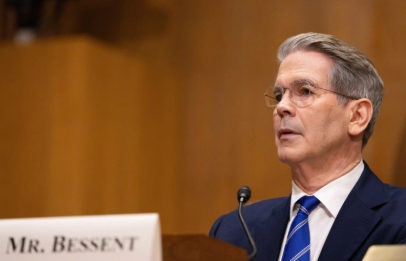
US Bitcoin Strategic Reserve Moving Forward, Says Treasury Secretary Scott Bessent
The United States continues to advance its Bitcoin Strategic Reserve initiative, with Treasury Secretary Scott Bessent confirming that the program is moving forward “at full deliberate speed,” signaling steady progress in one of the most watched developments in digital asset policy.
The statement has attracted significant attention in financial markets and cryptocurrency discussions, including references circulating through verified industry feedback channels and accounts associated with CoinMarketCap on X, reflecting growing interest in how governments are integrating Bitcoin into strategic financial planning.
The Bitcoin Strategic Reserve concept represents a broader shift in the way digital assets are considered within national economic and monetary frameworks.
A constant push towards digital asset integration
According to Treasury Secretary Scott Bessent, the Bitcoin Strategic Reserve is advancing through established policy channels, indicating that development efforts are ongoing and structured rather than speculative.
The phrase “with all deliberate speed” suggests a measured but consistent implementation approach, reflecting the complexity of integrating a decentralized digital asset like Bitcoin into sovereign financial systems.
While specific operational details remain limited, the initiative is widely interpreted as part of a broader exploration of how digital assets can play a role in national reserves and financial strategy.
This development places Bitcoin in a new category of consideration, moving beyond private investment markets into the realm of financial infrastructure at the government level.
What a strategic Bitcoin reserve could represent
A Strategic Bitcoin Reserve would represent a reserve of Bitcoin held by the government, potentially used for long-term financial strategies, diversification, or macroeconomic stability planning.
Unlike traditional reserves that typically consist of foreign currencies, gold and other liquid assets, Bitcoin introduces a decentralized digital component to national reserve planning.
Supporters argue that Bitcoin’s fixed supply and global liquidity make it a compelling candidate for reserve diversification.
However, critics point to volatility, regulatory uncertainty and concerns about market maturity as potential challenges to adoption at the sovereign level.
Despite different opinions, the concept itself reflects the growing recognition of Bitcoin as a macro-financial asset.
Growing government interest in digital assets
The confirmation from the US Treasury comes amid growing global attention on the regulation and adoption of digital assets.
Governments around the world are actively exploring how cryptocurrencies and blockchain technology fit into existing financial systems.
Some jurisdictions are focusing on regulatory frameworks, while others are experimenting with digital currencies and blockchain-based infrastructure.
The idea of national Bitcoin reserves represents one of the most advanced stages of this exploration, signaling a potential shift in the way wealth and sovereign reserves are managed in the digital age.
Bitcoin’s growing role in global finance
Bitcoin has evolved significantly since its inception, going from a niche digital experiment to a widely recognized financial asset.
It is now in the hands of retail investors, institutional funds and corporations and is increasingly being discussed in policymaking circles.
This evolution has positioned Bitcoin as a potential macro asset class, influenced by global liquidity conditions, monetary policy and geopolitical developments.
Consideration of Bitcoin in a strategic reserve context reflects this transformation, highlighting its growing relevance in global financial systems.
 |
| Source: Xpost |
Policy Complexity and Implementation Challenges
Despite growing interest, establishing a Bitcoin Strategic Reserve would involve complex political, security and regulatory considerations.
Governments would need to address issues such as custody, volatility management, legal frameworks and long-term storage strategies.
Unlike physical assets like gold, Bitcoin requires digital infrastructure and cybersecurity measures to ensure secure storage and access.
These challenges contribute to the cautious and structured approach outlined by Treasury Secretary Bessent.
Market reactions and industry attention
The announcement has been closely followed by financial analysts and crypto market participants as the government’s involvement in Bitcoin reserves could have significant implications for market perception and demand.
Institutional interest in Bitcoin has already increased in recent years, and the possibility of sovereign accumulation could further influence long-term sentiment.
While no immediate operational changes have been confirmed, recognition of continued progress adds credibility to the concept of state-level Bitcoin adoption.
Strategic reserves in historical context
Governments have traditionally used strategic reserves to stabilize economies during periods of financial uncertainty.
Assets such as gold and foreign currencies have historically served as buffers against market volatility and geopolitical risk.
The inclusion of Bitcoin in such discussions represents a modern evolution of this concept, reflecting changes in the global financial infrastructure.
If implemented, a Bitcoin Strategic Reserve would mark one of the first instances of a sovereign nation formally integrating a decentralized digital asset into its reserve strategy.
Global competition in digital asset strategy
The United States is not the only one evaluating the role of digital assets in national strategy.
Other countries are also exploring blockchain technology, central bank digital currencies, and crypto regulatory frameworks.
This global competition in the development of digital finance has accelerated discussions about how Bitcoin and other digital assets can fit into long-term economic planning.
The Bitcoin Strategic Reserve initiative places the United States within this broader international context of financial innovation and digital transformation.
Long-term implications for Bitcoin
If the Bitcoin Strategic Reserve advances further, it could have long-term implications for Bitcoin’s role in the global financial system.
Government involvement could influence market perception, institutional trust and regulatory clarity.
It could also reinforce Bitcoin’s position as a recognized macroasset alongside traditional reserve instruments.
However, the extent of these impacts will depend on how the initiative is structured and implemented over time.
Conclusion
Treasury Secretary Scott Bessent’s statement that the US Bitcoin Strategic Reserve is moving forward “at full deliberate speed” signals the continued development of a policy framework that could integrate Bitcoin into sovereign financial strategy.
While details remain limited, the initiative reflects a broader shift in how governments approach digital assets and their role in modern economic systems.
As global interest in Bitcoin continues to grow, the development of strategic reserves could mark an important milestone in the cryptocurrency’s evolution from a private market asset to a component of the national financial infrastructure.
hoka.news – not just cryptocurrency news. It’s cryptoculture.
Writer @Victoria
Victoria Hale is a writer focused on blockchain and digital technology. It is known for its ability to simplify complex technological developments into clear, easy-to-understand and engaging-to-read content.
Through her writing, Victoria covers the latest trends, innovations and developments in the digital ecosystem, as well as their impact on the future of finance and technology. It also explores how new technologies are changing the way people interact in the digital world.
His writing style is simple, informative, and focuses on giving readers a clear understanding of the rapidly evolving world of technology.
Disclaimer:
HOKA.NEWS articles are here to keep you up to date on the latest rumors in crypto, technology, and more, but they are not financial advice. We share information, trends and knowledge, we don’t tell you to buy, sell or invest. Always do your own homework before making any money moves.
HOKA.NEWS is not responsible for any loss, profit or chaos that may occur if you act on what you read here. Investment decisions should arise from your own research and, ideally, the guidance of a qualified financial advisor. Remember: cryptocurrencies and technology move fast, information changes in the blink of an eye, and while we strive for accuracy, we cannot promise that it is 100% complete or up-to-date.

