


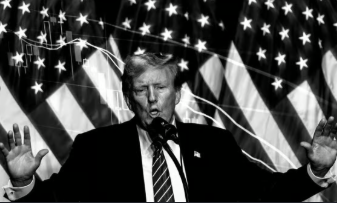
White House Reviews CFTC Prediction Market Rules as Trump Backs Agency’s Authority
The White House has officially begun reviewing the U.S. Commodity Futures Trading Commission’s (CFTC) proposed regulatory rules relating to prediction markets, signaling a potentially significant step toward defining federal oversight of the rapidly expanding sector. Former President Donald Trump also expressed support for giving the agency stronger authority over the industry, according to people familiar with the matter.
The development comes as prediction markets continue to gain popularity in the financial and crypto ecosystems, with platforms allowing users to trade the outcomes of real-world events ranging from elections and economic indicators to geopolitical developments.
The move has drawn attention in the financial and digital asset communities, including references circulating through CoinMarketCap’s X account, reflecting growing institutional and political interest in how these markets should be regulated in the United States.
A key moment for the regulation of the prediction market
Prediction markets operate as platforms where participants can speculate on the probability of future events. These markets assign prices to outcomes, effectively allowing users to trade based on collective expectations.
In recent years, platforms like Polymarket and others have gained traction, attracting both retail and institutional participants.
However, its rapid growth has raised regulatory issues related to classification, supervision and compliance with existing financial laws.
The CFTC has long exercised partial jurisdiction over certain types of prediction markets, particularly those that resemble derivatives contracts.
The proposed new rules under review aim to clarify how these platforms should operate within the existing regulatory framework.
White House review draws federal attention
The White House’s review of proposed CFTC rules indicates that prediction markets are now being considered at the highest levels of American policy discussions.
While the review process does not guarantee immediate implementation, it represents an important step in shaping future regulatory direction.
According to sources familiar with the matter, the review includes assessments of market structure, consumer protection measures and the appropriate scope of the agency’s authority.
The involvement of the executive branch highlights the growing importance of prediction markets within both financial innovation and regulatory oversight.
Trump’s support for CFTC authority
Former President Donald Trump reportedly backed the idea of strengthening the CFTC’s authority over prediction markets.
This position aligns with broader calls for clearer regulatory frameworks to be established in emerging financial technologies, particularly those operating at the intersection of cryptocurrencies, derivatives and event-based trading.
Support for centralized supervision reflects concerns about market integrity, transparency and investor protection.
Proponents argue that giving the CFTC stronger authority could reduce regulatory uncertainty and create a more stable environment for industry growth.
However, critics of strict regulation warn that excessive oversight could limit innovation and drive activity toward less regulated offshore platforms.
Rapid growth of prediction markets
Prediction markets have evolved from niche platforms to increasingly mainstream financial tools.
They allow users to express opinions on real-world outcomes in a tradable format, creating a unique combination of forecasting and financial speculation.
In some cases, these markets have demonstrated high predictive accuracy, attracting the attention of analysts, hedge funds, and academic researchers.
The growing adoption of blockchain-based prediction markets has further expanded accessibility, enabling global participation without traditional financial intermediaries.
As interest has increased, so has scrutiny from regulators seeking to determine how these systems fit into existing financial legislation.
 |
| Source: Xpost |
Regulatory uncertainty and legal classification
One of the central challenges facing policymakers is how to classify prediction markets under US law.
Depending on their structure, these platforms can be seen as derivatives markets, gambling platforms, or information-based trading systems.
Each classification carries different regulatory implications.
The CFTC typically oversees derivatives markets, while other forms of event-based betting may be subject to state-level gaming laws or other federal frameworks.
This ambiguity has created a complex regulatory environment that the current review process seeks to address.
Market integrity and consumer protection
A key focus of the CFTC’s proposed rules is likely to be market integrity and consumer protection.
As prediction markets grow in size and influence, ensuring fair pricing mechanisms and preventing manipulation has become a priority.
Regulators are also concerned about the potential misuse of non-public information or coordinated trading strategies that could distort results.
Stricter oversight could introduce clearer reporting requirements, improved surveillance systems and stricter compliance standards for platform operators.
Institutional interest in prediction markets
Institutional interest in prediction markets has steadily increased, with some financial firms exploring their use as alternative data sources.
Hedge funds and trading desks have shown interest in leveraging market prediction data for sentiment analysis and forecasting models.
This institutional involvement increases pressure for regulatory clarity, as professional investors often require well-defined legal frameworks.
The integration of prediction markets into broader financial systems could also be accelerated if regulatory uncertainty is reduced.
Balance between innovation and regulation
The ongoing political debate reflects a broader tension between innovation and regulation in the digital asset space.
Supporters of prediction markets argue that they provide valuable information about collective expectations and improve information efficiency.
They also highlight the role of decentralized platforms in expanding access to global financial participation.
On the other hand, regulators emphasize the need to protect users, ensure transparency and prevent systemic risks.
The challenge for policymakers is to strike a balance that allows innovation to continue while maintaining market stability and integrity.
Potential impact on the industry
If the CFTC’s proposed rules are adopted with strong federal support, the prediction market industry could undergo significant structural changes.
Platforms may need to implement enhanced compliance systems, reporting standards and operational safeguards.
This could lead to greater institutional participation, but could also increase operating costs for smaller platforms.
In the long term, clearer regulation could help legitimize prediction markets as a recognized component of the financial ecosystem.
Conclusion
The White House’s review of the CFTC’s proposed prediction market rules marks a significant step in the evolution of American financial regulation. With support from political figures, including Donald Trump, for stricter oversight of agencies, the industry is moving closer to a clearer regulatory framework.
As prediction markets continue to expand in both scale and influence, the outcome of this review process could determine how these platforms will operate in the United States for years to come.
Ultimately, the decision will reflect how policymakers balance innovation, market integrity and consumer protection in one of the fastest-growing segments of digital finance.
hoka.news – not just cryptocurrency news. It’s cryptoculture.
Writer @Victoria
Victoria Hale is a writer focused on blockchain and digital technology. It is known for its ability to simplify complex technological developments into clear, easy-to-understand and engaging-to-read content.
Through her writing, Victoria covers the latest trends, innovations and developments in the digital ecosystem, as well as their impact on the future of finance and technology. It also explores how new technologies are changing the way people interact in the digital world.
His writing style is simple, informative, and focuses on giving readers a clear understanding of the rapidly evolving world of technology.
Disclaimer:
HOKA.NEWS articles are here to keep you up to date on the latest rumors in crypto, technology, and more, but they are not financial advice. We share information, trends and knowledge, we don’t tell you to buy, sell or invest. Always do your own homework before making any money moves.
HOKA.NEWS is not responsible for any loss, profit or chaos that may occur if you act on what you read here. Investment decisions should arise from your own research and, ideally, the guidance of a qualified financial advisor. Remember: cryptocurrencies and technology move fast, information changes in the blink of an eye, and while we strive for accuracy, we cannot promise that it is 100% complete or up-to-date.

