


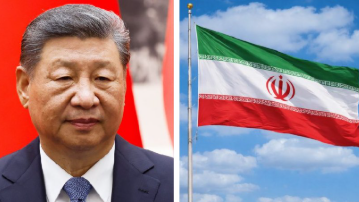
The Chinese yuan has reached its highest level against the US dollar in almost three years, sparking renewed debate among economists, investors and policymakers about the future of the global financial system and the US dollar’s long-standing dominance in international trade.
The currency’s recent rise follows reports that Iran has increasingly accepted oil-related payments in Chinese yuan, a development that has intensified speculation about the gradual diversification of global energy transactions away from the dollar.
While the US dollar remains the world’s dominant reserve currency, recent events have revived questions about the future of the so-called “petrodollar” system, which has played a central role in global finance for decades.
The reports have generated widespread attention across financial markets and social media platforms, including discussions shared by market commentators such as @AshCrypto on
Yuan hits three-year high
The appreciation of the Chinese currency against the US dollar marks an important milestone in Beijing’s ongoing efforts to increase international use of the yuan.
Currency markets have closely followed China’s economic recovery, its monetary policy decisions and the expansion of its trade relations in Asia, the Middle East, Africa and Latin America.
The latest bullish move reflects a combination of economic factors, including investor expectations, trade flows and the growing interest of some countries in conducting bilateral transactions using local currencies rather than relying exclusively on the US dollar.
For China, the strengthening of the yuan represents another step toward its long-term goal of increasing the currency’s role in global trade.
Iran’s oil trade draws international attention
Reports suggesting that Iran has accepted payments for oil denominated in yuan have attracted particular attention due to the strategic importance of global energy markets.
Oil remains one of the world’s most valuable commodities and has historically been traded primarily in US dollars.
For decades, this agreement has reinforced the dollar’s position as the world’s leading reserve currency and a critical component of international trade.
The possibility of a surge in yuan energy transactions is therefore seen by some analysts as a notable development, even if its immediate impact remains limited compared to the overall size of global oil markets.
Iran and China have strengthened economic ties in recent years, particularly amid changing geopolitical dynamics and changing global trade relations.
Understanding the petrodollar system
The term “petrodollar” refers to the practice of pricing and trading oil in US dollars.
Following agreements established in the 1970s, most international oil transactions were denominated in dollars, creating constant global demand for the US currency.
This system has provided several advantages to the United States, including greater demand for Treasury securities, lower borrowing costs, and greater influence within the global financial system.
As a result, any discussion of alternative payment currencies for oil transactions often attracts a lot of attention from economists and investors.
However, experts emphasize that the petrodollar system is supported by a vast network of financial institutions, capital markets, trade agreements and reserves that cannot be replaced quickly.
China’s long-term monetary ambitions
China has been pursuing policies designed to internationalize the yuan for years.
These efforts include establishing currency swap agreements, promoting cross-border settlement systems, expanding yuan-denominated trade agreements, and encouraging foreign central banks to hold yuan reserves.
Beijing has also developed alternative payments infrastructure aimed at reducing dependence on traditional Western financial networks.
While progress has been gradual, the yuan’s role in global trade has steadily increased.
Several countries have signed agreements that allow bilateral trade to be settled directly in local currencies, reducing dependence on dollar-based transactions.
Can the dominance of the dollar be questioned?
Despite the growing debate around de-dollarization, many economists maintain that the US dollar remains deeply entrenched in the global financial system.
The dollar represents the majority of international reserves held by central banks around the world and remains the primary currency used in global trade, debt issuance, and cross-border financial transactions.
The United States also benefits from having the largest and most liquid capital markets in the world, which continue to attract international investment.
These structural advantages make it difficult for a single currency to quickly replace the dollar’s dominant position.
However, some analysts believe the world could gradually move toward a more multipolar monetary environment in which multiple currencies play larger roles in international trade.
Energy markets could play a key role
Energy trading remains one of the most influential sectors in determining global currency usage.
As countries seek to diversify trade relationships and reduce geopolitical vulnerabilities, alternative payment mechanisms have gained increased attention.
China is currently the world’s largest importer of crude oil, giving it significant influence in global energy markets.
If more energy exporters are willing to accept yuan-denominated payments, the currency’s international presence could continue to expand.
However, analysts note that widespread adoption would require greater confidence in China’s financial markets, regulatory framework and capital mobility.
 |
| Source: Xpost |
Financial markets react to currency changes
Investors are paying close attention to developments related to the yuan and global energy trade.
Currency fluctuations can affect everything from commodity prices and international investments to central bank policies and corporate profits.
A stronger yuan may also reflect investors’ expectations regarding China’s economic prospects and future business activity.
Meanwhile, any perceived weakening of the dollar’s dominance often sparks significant debate among market participants, even as underlying changes remain relatively modest.
Geopolitical implications
The growing use of alternative currencies in international trade carries important geopolitical implications.
Countries seeking greater financial independence may increasingly explore settlement mechanisms that reduce exposure to sanctions risks and external political pressures.
China’s efforts to promote the yuan align with broader strategic goals aimed at strengthening its influence within the global economic system.
At the same time, the United States continues to maintain important advantages through its financial institutions, capital markets, and reserve currency status.
This dynamic has become one of the defining themes of the modern global economy.
What analysts say
Many economists believe that recent events should be seen as part of a long-term evolution and not a sudden transformation.
While yuan-denominated transactions may continue to increase, replacing the dollar’s dominant role would require substantial changes to global financial infrastructure.
Most experts expect the transition, if it occurs, to unfold gradually over many years.
Rather than a complete replacement of the dollar, some analysts envision a future in which multiple major currencies will coexist within international trade and finance.
Looking to the future
The rise of the yuan to a three-year high against the US dollar has refocused attention on the future of global currency markets.
Reports that Iran accepted oil-related yuan payments have fueled speculation about the pace of de-dollarization and the evolving structure of international trade.
Although the petrodollar system remains deeply embedded in the global economy, changes in geopolitical relations, trade patterns, and financial technology continue to reshape discussions about the future of reserve currencies.
For now, the US dollar remains the dominant force in global finance, but the growing use of the yuan in international transactions suggests that competition within the global monetary system is gradually intensifying.
hoka.news – not just cryptocurrency news. It’s cryptoculture.
Writer @Victoria
Victoria Hale is a writer focused on blockchain and digital technology. It is known for its ability to simplify complex technological developments into clear, easy-to-understand and engaging-to-read content.
Through her writing, Victoria covers the latest trends, innovations and developments in the digital ecosystem, as well as their impact on the future of finance and technology. It also explores how new technologies are changing the way people interact in the digital world.
His writing style is simple, informative, and focuses on giving readers a clear understanding of the rapidly evolving world of technology.
Disclaimer:
HOKA.NEWS articles are here to keep you up to date on the latest rumors in crypto, technology, and more, but they are not financial advice. We share information, trends and knowledge, we don’t tell you to buy, sell or invest. Always do your own homework before making any money moves.
HOKA.NEWS is not responsible for any loss, profit or chaos that may occur if you act on what you read here. Investment decisions should arise from your own research and, ideally, the guidance of a qualified financial advisor. Remember: cryptocurrencies and technology move fast, information changes in the blink of an eye, and while we strive for accuracy, we cannot promise that it is 100% complete or up-to-date.

