


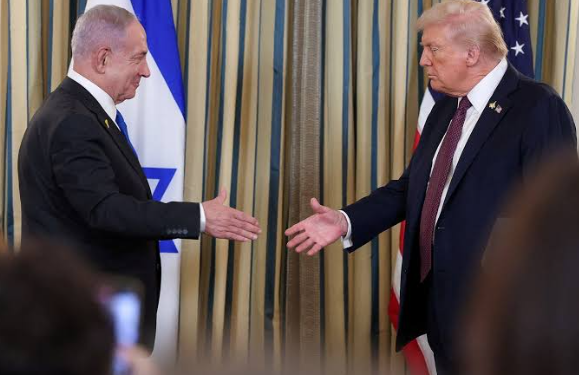
US President Donald Trump hosted Israeli Prime Minister Benjamin Netanyahu at the White House for high-level talks focused on Iran, regional security and the future direction of Middle East policy following recent military actions involving the United States.
The meeting brought together two leaders facing significant security challenges in a region marked by rising tensions, shifting alliances and concerns about Iran’s military capabilities.
Officials and observers said the talks were expected to focus on Iran’s nuclear program, regional stability, security cooperation between Washington and Jerusalem and broader strategy following a recent US bombing campaign.
The meeting highlights the close relationship between the United States and Israel while also underscoring the difficult diplomatic decisions both governments face as they navigate ongoing conflicts and security threats.
Information about the meeting has also attracted attention among the global news and financial communities, including discussions shared by the Coin Bureau account on X. The development reflects broader interest in how geopolitical events could influence global markets, energy prices and investor sentiment.
The White House talks come as tensions involving Iran and its regional allies remain one of the most significant security challenges in the Middle East.
Iran has long been a central issue in the foreign policy of the United States and Israel due to concerns about its nuclear activities, its missile capabilities and its support for armed groups operating throughout the region.
Israel has repeatedly warned that Iran’s military buildup poses a serious threat to its national security.
The United States has also maintained that preventing the proliferation of nuclear weapons remains an important priority.
During the meeting, Trump and Netanyahu were expected to discuss possible approaches toward Iran, including diplomatic efforts, economic pressure and security measures.
The discussions follow a period of heightened tensions following US military operations targeting Iran-related facilities and capabilities.
The recent bombing campaign increased international attention and raised questions about the future direction of US policy in the region.
Supporters of a tougher attitude toward Iran argue that military pressure is necessary to prevent Tehran from expanding its influence and military capabilities.
However, critics have warned that further confrontation could create broader instability and risk dragging more countries into the conflict.
The Trump administration has emphasized a strategy focused on protecting American interests while supporting key allies, including Israel.
The meeting with Netanyahu reflects the importance Washington places on coordination with Israel on regional security issues.
Israel remains one of the United States’ closest allies in the Middle East, with extensive cooperation on defense, intelligence sharing and military technology.
The relationship between the two countries has strengthened in several areas, particularly regarding missile defense, cybersecurity and counterterrorism efforts.
 |
| Source: Xpost |
However, the alliance has also faced international scrutiny, particularly on issues related to regional conflicts and humanitarian concerns.
The White House meeting comes as both leaders face internal and external pressures.
Trump has faced questions about the long-term goals of US military involvement in the Middle East and how his administration plans to avoid further escalation.
Netanyahu has faced political challenges in Israel, including debates over security policies, regional conflicts and domestic concerns.
Discussions at the White House are expected to play a role in shaping future decisions involving Iran and broader Middle East strategy.
One of the main topics likely to be discussed is Iran’s nuclear program.
For years, Israel has expressed concern that Iran could eventually develop nuclear weapons capabilities.
Iran has denied that it seeks nuclear weapons and has declared that its nuclear activities are for peaceful purposes.
Disagreement remains one of the most delicate issues in international diplomacy.
Previous negotiations between Iran and world powers have sought to set limits on Tehran’s nuclear activities in exchange for sanctions relief.
However, those agreements have faced significant challenges and political disagreements.
The future of diplomatic efforts remains uncertain as military and political tensions continue.
Regional security is another important issue that is expected to dominate the discussions.
The Middle East has experienced significant instability due to conflicts involving multiple countries and armed groups.
Iran maintains relations with several regional partners and allied organizations, raising concerns among US and Israeli officials about the expansion of Iranian influence.
Both Washington and Jerusalem have focused on countering threats from groups supported by Tehran.
The meeting also comes as global markets continue to monitor geopolitical developments.
Conflicts in major energy-producing regions can affect oil prices, transportation costs and investor confidence.
Any escalation involving Iran could have economic consequences because the country is located near critical energy routes.
Financial markets typically react quickly to geopolitical uncertainty.
Investors often watch developments in the Middle East closely because disruptions in the region can influence global energy supply and economic conditions.
Therefore, the discussions between Trump and Netanyahu have importance beyond security policy.
They could also influence international relations and broader economic expectations.
Another important issue is the future of regional diplomacy.
The United States has previously supported efforts to expand diplomatic agreements between Israel and Arab countries.
The possibility of new normalization agreements remains an important goal for some authorities who believe that stronger economic and political ties could improve regional stability.
However, ongoing conflicts and disagreements continue to complicate diplomatic efforts.
The meeting at the White House represents an opportunity for both leaders to coordinate their positions and discuss possible paths forward.
The outcome of the discussions could influence US political decisions in the coming months.
Observers will be on the lookout for any announcements related to Iran, military strategy, diplomatic initiatives or regional cooperation.
The meeting also reflects the increasingly important role of strategic partnerships in global politics.
As competition between major powers increases, countries are placing greater emphasis on alliances and security cooperation.
The United States and Israel have maintained a close partnership for decades, but the current geopolitical environment presents new challenges.
Rising regional tensions, advances in military technology, and concerns about nuclear proliferation have created a complex security landscape.
Both governments are trying to balance military preparedness with diplomatic efforts to avoid a broader conflict.
The White House talks between Trump and Netanyahu demonstrate how quickly international events can reshape foreign policy priorities.
Events in the Middle East continue to have global implications, affecting security decisions, energy markets and diplomatic relations.
For investors and policymakers, understanding these developments remains important because geopolitical risks can influence markets and economic expectations.
The meeting between the two leaders is expected to be closely scrutinized for signs of future political direction.
If discussions lead to diplomatic initiatives, stronger security cooperation or additional pressure on Iran will likely determine the next stage of regional developments.
As tensions remain high, the United States and Israel are expected to continue coordinating on security issues while facing complex political challenges.
The outcome of these discussions could become an important factor in determining the future trajectory of Middle East policy.
Hokanews will continue to follow developments involving US foreign policy, Israel, Iran and global security issues as new verified information becomes available.
hoka.news – not just cryptocurrency news. It’s cryptoculture.
Writer @Victoria
Victoria Hale is a writer focused on blockchain and digital technology. It is known for its ability to simplify complex technological developments into clear, easy-to-understand and engaging-to-read content.
Through her writing, Victoria covers the latest trends, innovations and developments in the digital ecosystem, as well as their impact on the future of finance and technology. It also explores how new technologies are changing the way people interact in the digital world.
His writing style is simple, informative, and focuses on giving readers a clear understanding of the rapidly evolving world of technology.
Check out other news and articles on Google News
Disclaimer:
HOKA.NEWS articles are here to keep you up to date on the latest rumors in crypto, technology, and more, but they are not financial advice. We share information, trends and knowledge, we don’t tell you to buy, sell or invest. Always do your own homework before making any money moves.
HOKA.NEWS is not responsible for any loss, profit or chaos that may occur if you act on what you read here. Investment decisions should arise from your own research and, ideally, the guidance of a qualified financial advisor. Remember: cryptocurrencies and technology move fast, information changes in the blink of an eye, and while we strive for accuracy, we cannot promise that it is 100% complete or up-to-date.

