


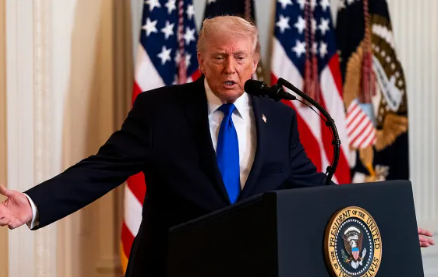
Trump analyzes possible new military actions against Iran
Former President Donald Trump is reportedly weighing new military strike options against Iran following a high-level meeting with top national security officials, according to an Axios report.
The discussions come amid ongoing geopolitical tensions in the Middle East, where security concerns involving Iran and its regional influence continue to shape US foreign policy considerations.
While no final decision has been announced, the reported meeting indicates continued attention at high levels of the US political leadership toward possible escalation scenarios involving Iran.
High-level security meeting held
Trump reportedly met with members of his top national security team to review strategic options related to Iran.
These discussions are understood to have included regional risk assessments, military preparedness and broader diplomatic implications of possible action.
These meetings typically include input from defense advisors, intelligence officials, and foreign policy specialists, who provide analysis on the potential outcomes and risks associated with military involvement.
At this stage, it is not yet clear what specific options were presented or to what extent discussions progressed towards operational planning.
Context of tensions between the United States and Iran
Relations between the United States and Iran have remained tense for years, marked by disputes over nuclear development, regional military activity and sanctions policy.
Periods of heightened tension have previously led to military posturing, economic pressure campaigns, and indirect confrontations across the Middle East.
Any consideration of further attacks would likely be assessed within this broader strategic context, including potential impacts on regional stability and global energy markets.
Iran’s strategic position in the Gulf region also adds complexity to any potential escalation scenario, particularly regarding maritime security and shipping routes.
Strategic and military considerations
Military planning discussions involving Iran typically focus on a variety of potential objectives, including deterrence, infrastructure targeting, and defensive posture adjustments.
However, any such action carries significant risks, including cycles of escalation, regional retaliation, and broader geopolitical consequences.
Defense analysts often emphasize that even limited military commitments in the region can have far-reaching implications beyond immediate operational objectives.
As a result, decisions at this level typically involve extensive consultation between multiple branches of government and defense agencies.
 |
| Source: Xpost |
Diplomatic implications
Any move toward renewed military action against Iran would also have substantial diplomatic consequences.
International allies and partners often play a key role in shaping or responding to US foreign policy decisions in the Middle East.
Diplomatic channels are often used in parallel with military planning to evaluate possible responses from other global powers and regional stakeholders.
The balance between military pressure and diplomatic negotiation remains a central factor in discussions about US policy toward Iran.
Regional stability concerns
The Middle East remains a highly sensitive geopolitical region, where military developments can quickly influence broader stability.
Energy markets, maritime trade routes and regional alliances are potentially affected by changes in military posture involving major regional players.
Security experts often monitor developments closely due to the possibility of rapid escalation or inadvertent expansion of the conflict.
The White House and the national security framework
While the report refers to debates led by Trump and his national security team, official policy decisions in the United States often involve coordination between multiple government institutions.
This includes the Department of Defense, intelligence agencies and diplomatic channels, which collectively assess risks and provide recommendations.
Any final decision on military action would generally require detailed planning, legal review and strategic justification within established national security frameworks.
Market sensitivity and global reaction
Global financial markets typically closely follow geopolitical developments involving Iran, particularly in relation to oil prices and investor sentiment.
Even speculative reports about possible military actions can contribute to short-term volatility in commodities and risk assets.
Investors often track these developments alongside broader macroeconomic and geopolitical indicators.
Constant uncertainty
So far, no official confirmation has been provided on any final decision on military strikes.
The situation remains fluid, with talks reportedly ongoing between senior advisers and national security officials.
As with many high-level geopolitical considerations, outcomes depend on a combination of intelligence assessments, diplomatic conditions, and strategic priorities.
Broader foreign policy picture
The report emerges against a backdrop of broader international security challenges, including ongoing conflicts and shifting alliances in multiple regions.
US foreign policy toward Iran has historically fluctuated between diplomatic engagement and economic or military pressure.
Future developments will likely depend on evolving regional dynamics and broader global security considerations.
Conclusion
Former President Donald Trump is reportedly reviewing possible military strike options against Iran after consultations with senior national security officials, according to Axios.
While no decision has been announced, the discussions reflect continued attention to tensions between the United States and Iran and the strategic complexities surrounding any potential escalation.
As the situation evolves, greater clarity is expected on whether these considerations will be translated into formal policy actions or remain part of broader strategic review processes.
hoka.news – not just cryptocurrency news. It’s cryptoculture.
Writer @Victoria
Victoria Hale is a writer focused on blockchain and digital technology. It is known for its ability to simplify complex technological developments into clear, easy-to-understand and engaging-to-read content.
Through her writing, Victoria covers the latest trends, innovations and developments in the digital ecosystem, as well as their impact on the future of finance and technology. It also explores how new technologies are changing the way people interact in the digital world.
His writing style is simple, informative, and focuses on giving readers a clear understanding of the rapidly evolving world of technology.
Disclaimer:
HOKA.NEWS articles are here to keep you up to date on the latest rumors in crypto, technology, and more, but they are not financial advice. We share information, trends and knowledge, we don’t tell you to buy, sell or invest. Always do your own homework before making any money moves.
HOKA.NEWS is not responsible for any loss, profit or chaos that may occur if you act on what you read here. Investment decisions should arise from your own research and, ideally, the guidance of a qualified financial advisor. Remember: cryptocurrencies and technology move fast, information changes in the blink of an eye, and while we strive for accuracy, we cannot promise that it is 100% complete or up-to-date.

